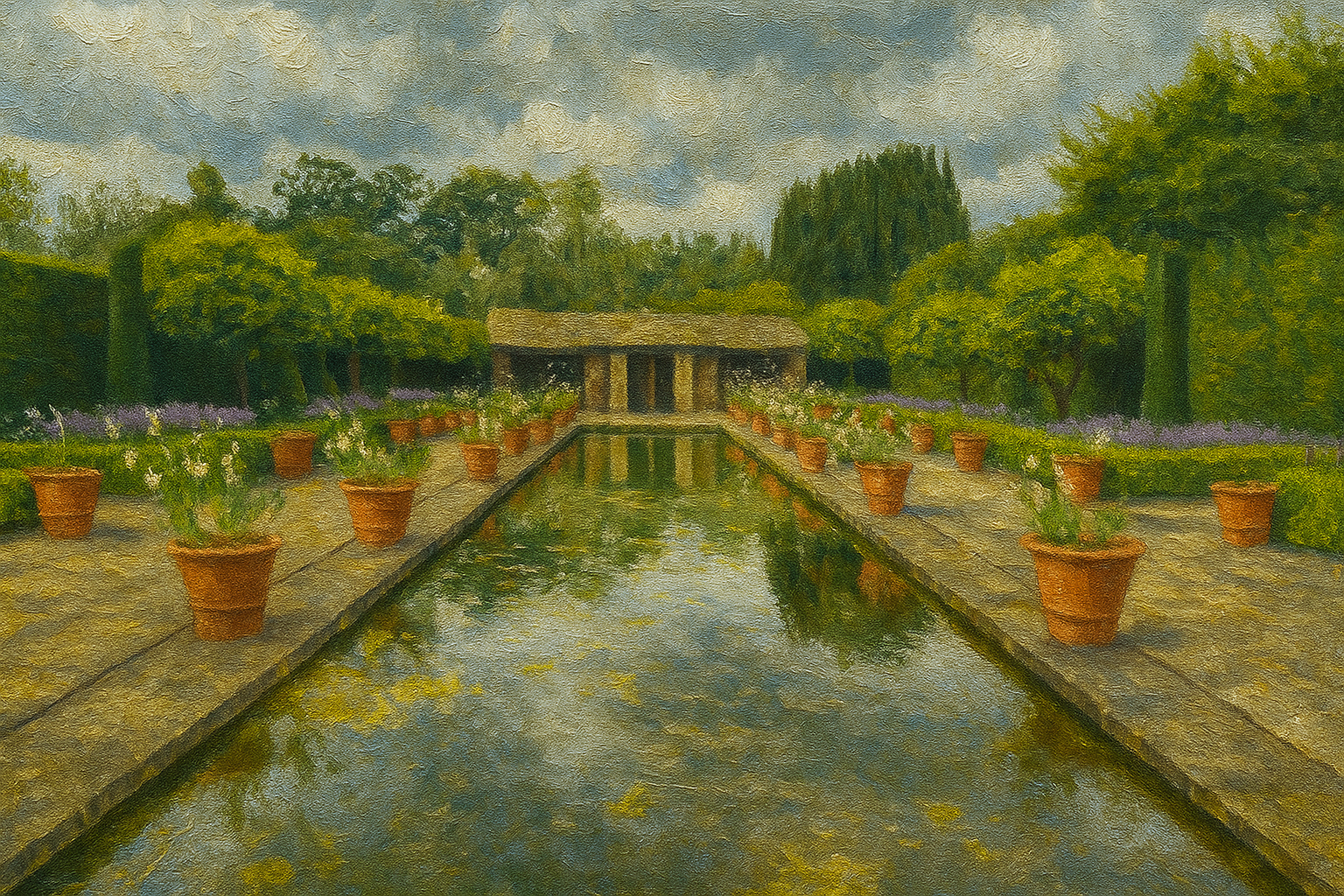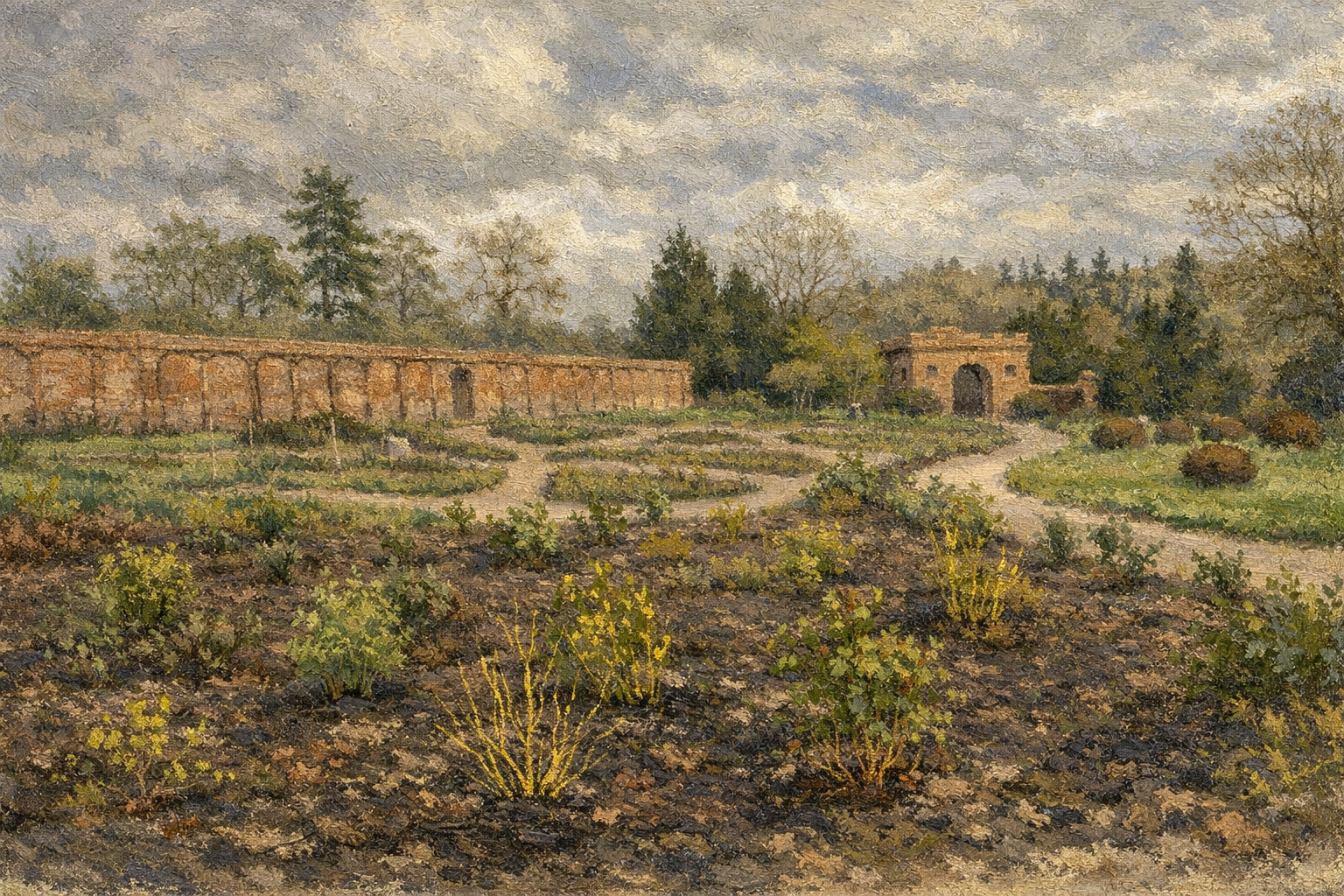
In the quiet interval between one year and the next, I find myself on a cold wintry morning looking out to my mother-in-law’s garden. Everything is perfectly ordered, but more importantly: everything has space. No two plants compete for the same soil; each is allowed to breathe and grow and take what nutrients it needs. Planted too closely, a garden becomes cluttered and chaotic. But here there is order. Here there is a rhythm. Here is beauty.
As I turn from the window to my calendar, the contrast is immediate and unwelcome. Where the garden offers space, my schedule shows daunting, overlarge blocks pressing against one another:
- 6:00–9:00am – Writing
- 9:00am–1:00pm – Work (overlapped with meetings)
- 1:00–2:00pm – Lunch
- 2:00–5:30pm – Work (overlapped with meetings)
- 5:30–6:30pm – Dinner
A Day Without Margins
Looking at these blocks, I feel my heart drop. My mind cries out in protest: “There’ll be no time to do the things I want to do!” Worse still is the fearful certainty that by evening, I’ll be too exhausted to pursue any creative endeavours until the next morning—when the cycle begins again.
A few days ago during dinner we were discussing our hike in the countryside of Surrey, which my wife and I grew up in and which we visited again this winter. Never before had we considered that Surrey is full of warren-like paths overshadowed by trees that occasionally give way to vistas—hills and woods standing as dark silhouettes against the blue winter sky. But even these vistas feel like brief windows of relief compared to the vast openness of Herefordshire, where you can espy the Malvern Hills from afar on a clear day and the patchwork quilt of fields and farms and hedgerows stretching for miles. My mother-in-law admitted that when she moved to Warwickshire, she felt she could breathe—a notion she had never considered before when living in Surrey. This was purely the gift of space. And with space came a feeling of order, of control, of opportunity.
Each morning I would focus so intently on writing that the 9am alarm—time to begin my day job—felt like an intrusion. Not because I resented the work itself (it pays the bills, after all), but because I had set aside no time to transition. No time to shower, to dress, to brush my teeth—the daily ritualistic tasks we promise to handle ’later’, except that later never arrives.
I needed breathing room. I needed space. I needed each block of time to stand on its own, not competing with those planted around it.
Clearing the Overgrowth
The solution required clearing away the overgrowth. Rather than dedicating a three-hour block labelled “writing”—which in practice meant breakfast, reading a chapter, checking emails, browsing the news, putting on the washing, and whatever other task my mind could conjure to avoid the page—I set my alarm for 5:45am and created a single morning appointment: “Plan Day” at 6:00am.
The rule was simple: for every block of time, I would plant 5–10 minutes of breathing room before the next. My typical morning now looks like this:
- 6:10–6:25am – Breakfast & Reading
- 6:30–6:45am – Review of Previous Work
- 6:50–7:15am – Writing Practice
- 7:20–8:25am – Writing
- 8:30–8:50am – Prepare for Work
- 9:00am – Start Work
Room to Flourish
By breaking down those overlarge blocks, examining and planning my calendar became a part of the morning rhythm itself. I knew exactly what to expect, and the margins between tasks gave me room to breathe. Those extra five or ten minutes became space for a cup of tea, for putting away the breakfast dish, or simply for walking around the garden in the fresh morning air.
The daily planning ritual brought an unexpected gift: flexibility within structure. If I wanted to swap the writing practice block with my review of the previous day’s work, I could. The system bent to my needs rather than constraining them. That three-hour block I had once ignored became something I carefully calculated, even anticipated. Planning the day ahead became its own small joy—a moment of control in what had felt like chaos.
The morning planning session offered another benefit: visibility into the shared calendar. Too often, I had ignored my wife’s scheduled commitments, nursing hopes of writing time later in the day—time that would evaporate when she reminded me of plans I’d forgotten. The frustration I felt wasn’t about being blocked by others. I had blocked myself by refusing to plan.
I learned this: dedicated time without a plan is fertile soil for procrastination. An empty calendar block becomes an invitation to take the path of least resistance. Worse, by allowing automated blocks to appear while ignoring them whenever other obligations arose, I had trained myself to dismiss the very notifications meant to protect my practice. Each ignored reminder made the next one easier to ignore, until the habit of avoidance became stronger than the habit of creation.
By giving each activity room to breathe—by planning rather than simply scheduling—I’ve found that my morning practice has begun to grow and bloom and flourish. And on cold wintry mornings, when I glance from my calendar to the garden beyond the window, I see the same principle at work: everything ordered, everything spaced, everything given what it needs to thrive.